Why Your Racket Choice Actually Matters
So you've played a few games, borrowed a friend's racket, maybe rented one at the club — and now you're thinking about buying your own. Smart move. But walk into any padel shop and you'll find dozens of options staring back at you, all promising to transform your game. How do you choose a padel racket that's actually right for you?
Here's the thing: the "best" racket doesn't exist. There's only the best racket for your game. Your playing level, style, physicality, and even how often you play all factor in. This padel racket buying guide breaks it all down so you can walk into a shop — or our pro shop here in Limassol — and know exactly what you're looking for.
The Three Racket Shapes — And What They Do
Every padel racket falls into one of three shapes. This is the single most important decision you'll make, so let's get it right.
Round Shape
Round rackets have their sweet spot right in the centre of the face. That means more forgiveness on off-centre hits, easier control, and a generally more comfortable feel. If you're just getting started — or you value precision over raw power — this is your shape.
Largest sweet spot of all three shapes
More control and less vibration on mishits
Lower balance point (weight closer to the handle), making them easier to manoeuvre
Ideal for beginners and defensive players
Diamond Shape
Diamond rackets concentrate weight at the top of the head. The sweet spot sits higher, which means more power on overhead smashes and aggressive volleys — but less forgiveness when you don't hit the ball cleanly. These are weapons, not training wheels.
Highest power potential
Smaller, higher sweet spot — demands good technique
Head-heavy balance for extra punch
Best suited for advanced and competitive players
Teardrop (Hybrid) Shape
The teardrop sits right between round and diamond. You get a reasonable sweet spot with decent power — a genuine all-rounder. This is where most intermediate players land, and honestly, it's a great shape for anyone who wants a bit of everything.
Balanced blend of power and control
Medium sweet spot positioned slightly above centre
Versatile enough to grow with your game
Perfect for intermediate players ready to step up
Weight: Lighter Isn't Always Better
Padel rackets typically weigh between 340g and 390g. It might not sound like much of a range, but you'll feel every gram after an hour of play.
340–355g (light): Easier to swing, less strain on your arm and shoulder. Great for beginners, players recovering from injuries, or anyone who plays frequently and wants to avoid fatigue.
355–370g (medium): The sweet spot for most players. Enough mass to generate power without sacrificing manoeuvrability.
370–390g (heavy): Maximum power and stability. Only recommended if you have solid technique and good physical conditioning. A heavy racket swung poorly does more harm than good.
A common mistake? Buying a racket that's too heavy because it "feels powerful" in the shop. Remember, you're not swinging it once — you're swinging it for an hour or two. Start lighter than you think you need and work up over time.
Materials: What's Inside Your Racket
Understanding what to look for in a padel racket means knowing what it's made of. There are two things to consider: the face material and the foam core.
Face Materials
Fiberglass (glass fibre): Softer feel, more flex on contact. This gives you better touch and a more forgiving response — ideal for beginners and control-oriented players. Also tends to be more affordable.
Carbon fibre: Stiffer and more rigid. Transfers more energy to the ball on hard hits, which means more power and a crisper feel. Preferred by intermediate to advanced players who can generate their own pace. Higher price point.
Hybrid (carbon + fiberglass): Many mid-range rackets mix both materials to balance feel and responsiveness. A solid choice for players transitioning between levels.
Foam Cores
FOAM (polyethylene foam): Softer and more elastic. Gives the ball a slight "trampoline" effect, adding power without extra effort. Great for beginners who need help generating pace.
EVA (ethylene-vinyl acetate): Denser and firmer. Offers more control and a more predictable response. Most competitive players prefer EVA because it rewards clean technique. You'll also find variations like Ultra EVA (softer) and Hard EVA (very firm).
In general: FOAM core + fiberglass face = beginner-friendly. EVA core + carbon face = performance-oriented. But there are plenty of good rackets that mix and match.
Balance: Where the Weight Sits
Balance refers to how weight is distributed along the racket. It's described in three categories:
Low balance (handle-heavy): More control, easier to react quickly at the net. Common in round rackets.
Medium balance: Neutral feel. Found in teardrop shapes.
High balance (head-heavy): More power on overhead shots. Typical of diamond rackets.
Your balance preference will naturally follow your shape choice. If you've picked a round racket for control, it'll likely come with a low-to-medium balance already. Don't overthink this one — it usually sorts itself out.
Grip Size: The Overlooked Detail
Most padel rackets come in a standard grip circumference around 10.5–11.5cm. Unlike tennis, there's less variation here, but it still matters. A grip that's too thin will make you squeeze harder (hello, elbow pain), and a grip that's too thick reduces wrist mobility.
The rule of thumb: when you hold the racket, you should be able to fit your index finger from your other hand between your fingertips and palm. If it's too thin, you can always add an overgrip. Too thick is harder to fix.
Racket Recommendations by Level
Beginner
Shape: Round
Weight: 340–360g
Materials: Fiberglass face, FOAM or soft EVA core
Balance: Low to medium
Price range: €100–€200
Focus on: Control, comfort, and forgiveness
If you're brand new to padel, don't spend €500 on a racket you'll outgrow in six months. Get something forgiving, learn your technique, and upgrade once you know what you actually want. If you're still figuring out the basics, our beginner's guide to padel is a good place to start.
Intermediate
Shape: Teardrop
Weight: 355–375g
Materials: Carbon/fiberglass hybrid face, EVA core
Balance: Medium
Price range: €200–€400
Focus on: Versatility and room to grow
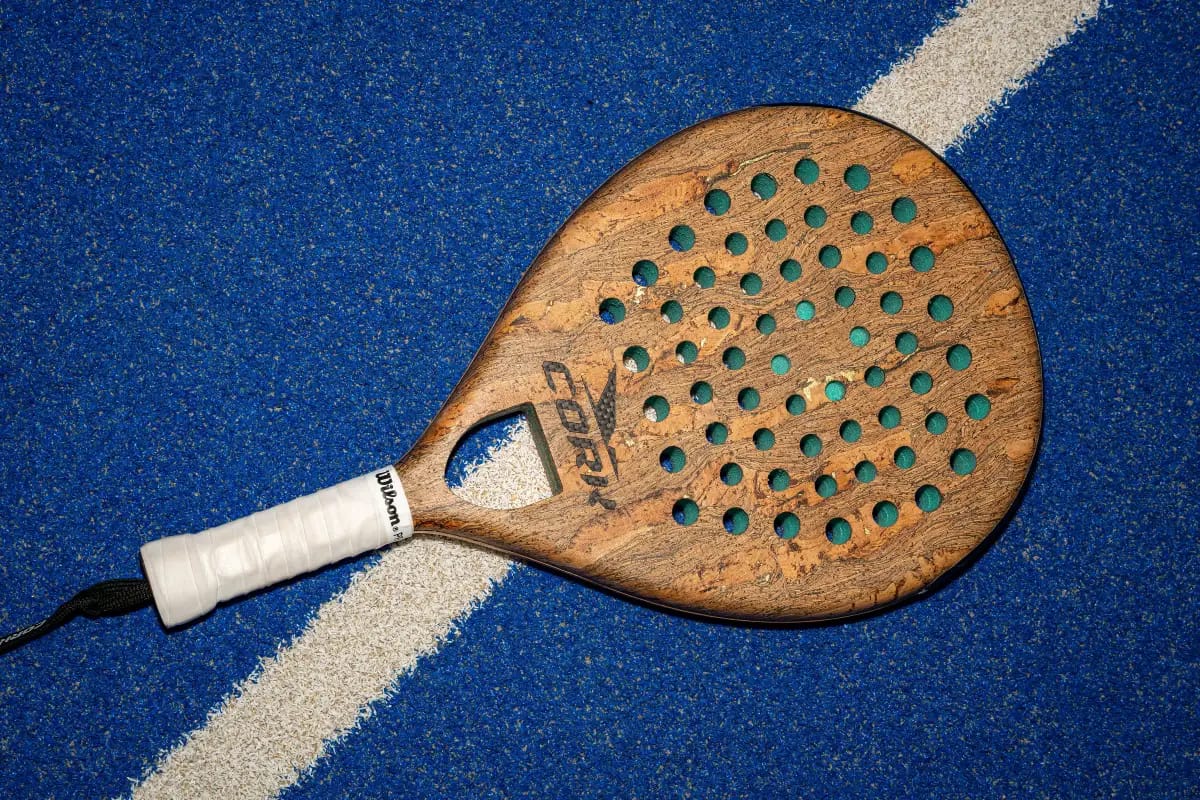
This is where most players get the most value. Brands like Babolat and Cork — both available at our pro shop in Germasogeia — have excellent teardrop options in this range. The Babolat technical range and Cork's lineup both offer seriously good rackets for intermediate players.
Advanced / Competitive
Shape: Diamond or aggressive teardrop
Weight: 365–390g
Materials: Full carbon face, hard EVA core
Balance: Medium to high
Price range: €300–€500+
Focus on: Power, spin potential, and precision
At this level, you know what you want. You've played enough to feel the difference between rackets. The best advice here is to demo before you buy — which brings us to the final point.
Try Before You Buy
Reading specs is useful. Holding the racket in your hand is better. Actually playing with it? That's how you really know.
At Green Padel Club in Germasogeia, Limassol, our pro shop carries rackets from Cork, Babolat, and other top brands. More importantly, our staff actually play padel — they can match you with the right racket based on your level, style, and budget. We also offer racket rentals, so you can test different options during real play before committing.
Whether you're buying your first racket or upgrading to something more competitive, the right choice comes down to honest self-assessment. Pick for the player you are today, not the player you hope to be next year. A well-matched racket makes every session more enjoyable — and that's what keeps you coming back to the court.
Ready to find your racket? Visit our pro shop at Green Padel Club, drop us an email at hello@greenpadelclub.com, or call us on +357 99 790444. We'll get you sorted.